Stem Drawing Toy Uk
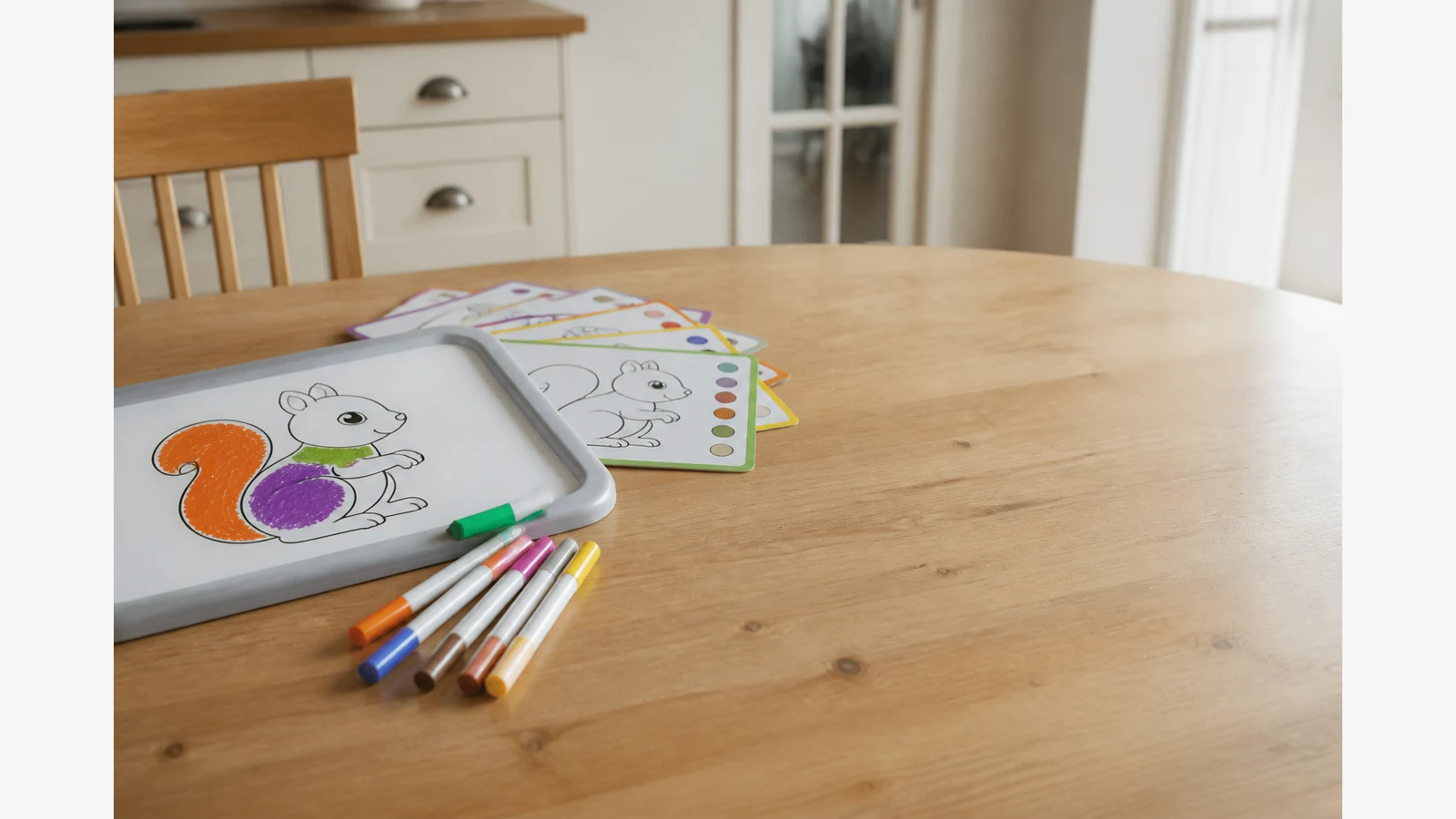
In UK shops, a STEM drawing toy usually means a set that asks a child to follow a sequence — pattern cards, step prompts, or a build-then-draw workflow — not a bag of loose craft supplies. Treat “STEM” as a buying label for guided focus and fine-motor practice, not a school accreditation.
STEM drawing toy vs a pure craft kit
A craft kit is often open-ended colouring or sticking. A STEM-leaning drawing toy typically adds a clear start, a repeatable round, and a visible finish. UK museum retail, for example, lists robotic art kits that combine building with creative output for ages 5+, which shows how retailers group “make then create” products under an educational framing (Science Museum Shop robotic art kit). Separately, UK sellers market card-insert drawing robots as screen-free creative toys that support fine-motor practice (Little Dreams UK educational drawing robot listing).
Decision table: common STEM drawing formats
| Format | What the child does | Screen need | Best when… |
|---|---|---|---|
| Guided pattern cards | Follows printed steps, then colours | Usually none | You want short, repeatable rounds |
| Independent colouring set | Chooses colours freely | None | The child already likes open art |
| Build-and-draw kit | Assembles parts, then makes marks | Varies | You want construction plus art |
| Coding-art kit | Programs paths or lights | Often a tablet/app | You specifically want coding practice |
Age and supervision checklist (roughly 3–8)
- Can the child hold a chunky marker for 10–15 minutes with light help?
- Is a grown-up nearby for first sessions (card orientation, capping pens)?
- Does the set match mess tolerance in your home — wipe-clean surface vs paper stacks?
- Is there a clear “one card / one round” stop point so evenings stay short?
What to verify in the box
- Guidance: pattern cards, read-aloud prompts, or step sheets — and a realistic card count on the listing.
- Consumables: markers, brushes, or stamps included, plus how replacements work.
- Mess level: wipe-clean tray vs paper; storage for wet markers.
- Screen dependency: app required, optional, or none. If you want screen-free evenings, confirm “no tablet” in writing on the product page.
- Claims to ignore: invented STEM certificates, curriculum compliance, or coding/AI features you cannot see on the live listing.
Who should pick a different option
Choose a true coding robot if programming is the main goal. Choose clay or open craft if the child rejects any guidance. Choose a simple magnetic or LED board if you only need travel scribble time — then compare formats in our kids drawing board robot comparison.
Reader next step
Shortlist two formats from the table, check screen need and included pens on each listing, then decide. If you are also weighing fine-motor practice, see fine motor skills toys for preschoolers. For a same-site product overview of a card-guided talking drawing robot, you can review the TalkingDra product detail page after your checklist — not before.