Fine Motor Skills Toys For Preschoolers Uk
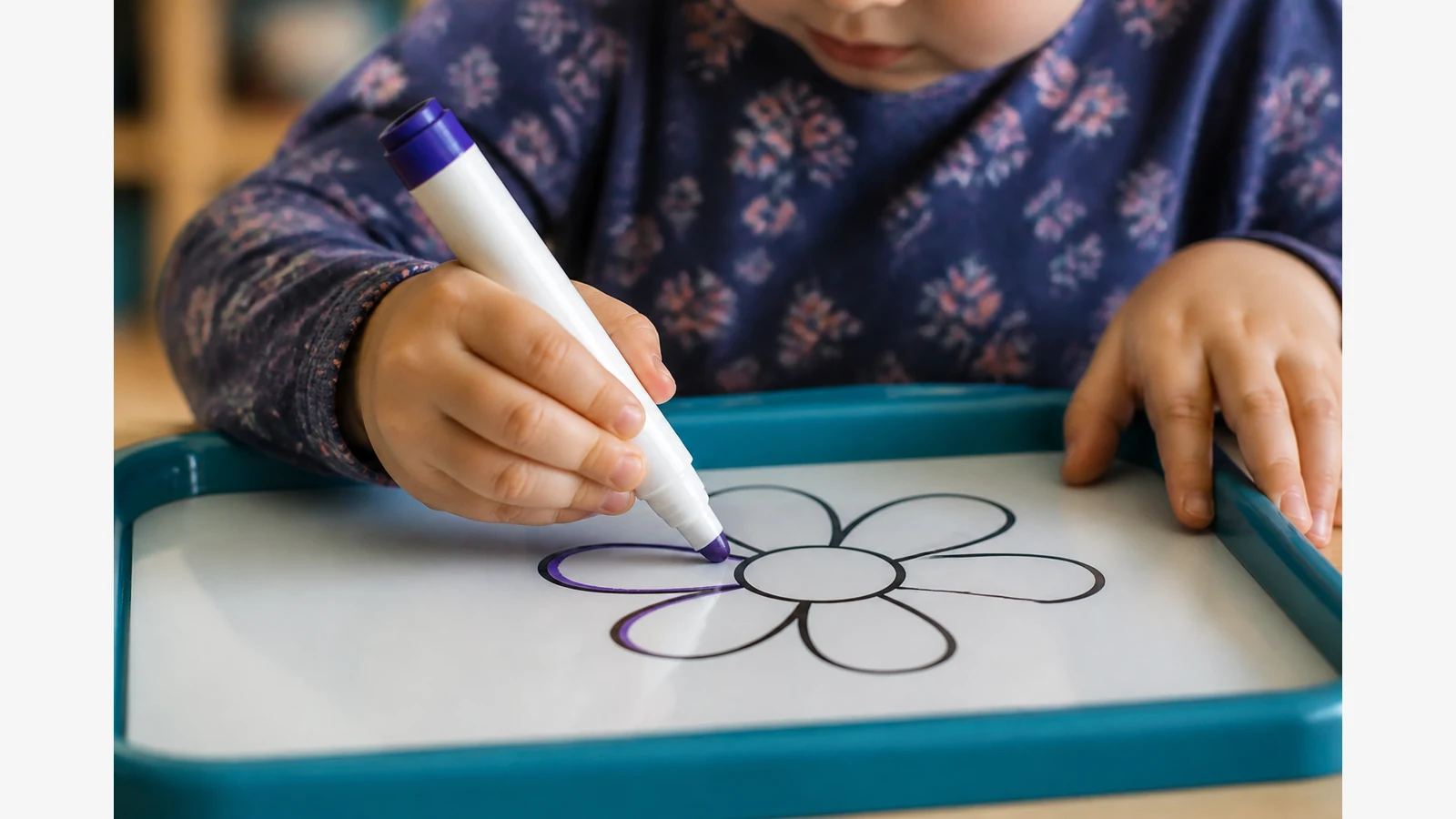
When UK parents search for fine motor skills toys for preschoolers, drawing tools that practise grip, tracing, and controlled colouring — without a screen — are a practical shortlist. Look for toys that invite careful hand movement, not just passive entertainment.
Buyer criteria table
| Criterion | What good looks like | Why it matters |
|---|---|---|
| Grip size | Chunky markers or stylus suited to small hands | Reduces early frustration |
| Guided steps | Simple outlines or cards | Gives a clear motor goal |
| Mess level | Wipe-clean or contained tray | Parents allow longer practice |
| Repeat use | Erasable surface or many prompts | Practice without wasting paper |
| Screen need | None | Motor practice stays tactile |
Where drawing tools sit among other motor toys
Puzzles and threading build pinch strength; magnetic boards support early pen-control style mark-making and are often marketed for fine motor skills (Toytastic magnetic board fine-motor positioning). Card-guided drawing robots are positioned as screen-free ways to practise fine motor skills and early writing confidence (Little Dreams UK drawing robot fine-motor listing). None of these is clinical therapy.
Age and supervision notes
Preschoolers approaching school writing readiness often benefit from short, supervised rounds: grown-up sets the card, child traces or colours, then wipe and stop. Use confirmed details milestone ages or promise handwriting improvement. Keep language to grip practice, tracing, and colouring focus.
Who should choose a different toy
If a child refuses sitting tasks, try outdoor gross-motor play first. If a clinician has recommended a specific occupational-therapy programme, follow that advice rather than a retail toy blog. For broader STEM shopping language, see the STEM drawing toy buyers checklist. For after-school timing of short practice, use after-school creative activities.
FAQ: realistic expectations
Will a drawing toy fix pencil grip? It can offer practice opportunities; it does not guarantee a grip change.
How long should sessions last? Often 10–20 minutes is enough for preschool attention.
Is “Montessori” on the box enough? Prefer observable design (guided steps, child-sized tools) over labels alone.
When your criteria are clear, you may optionally review a same-site guided drawing option on the TalkingDra product detail page.